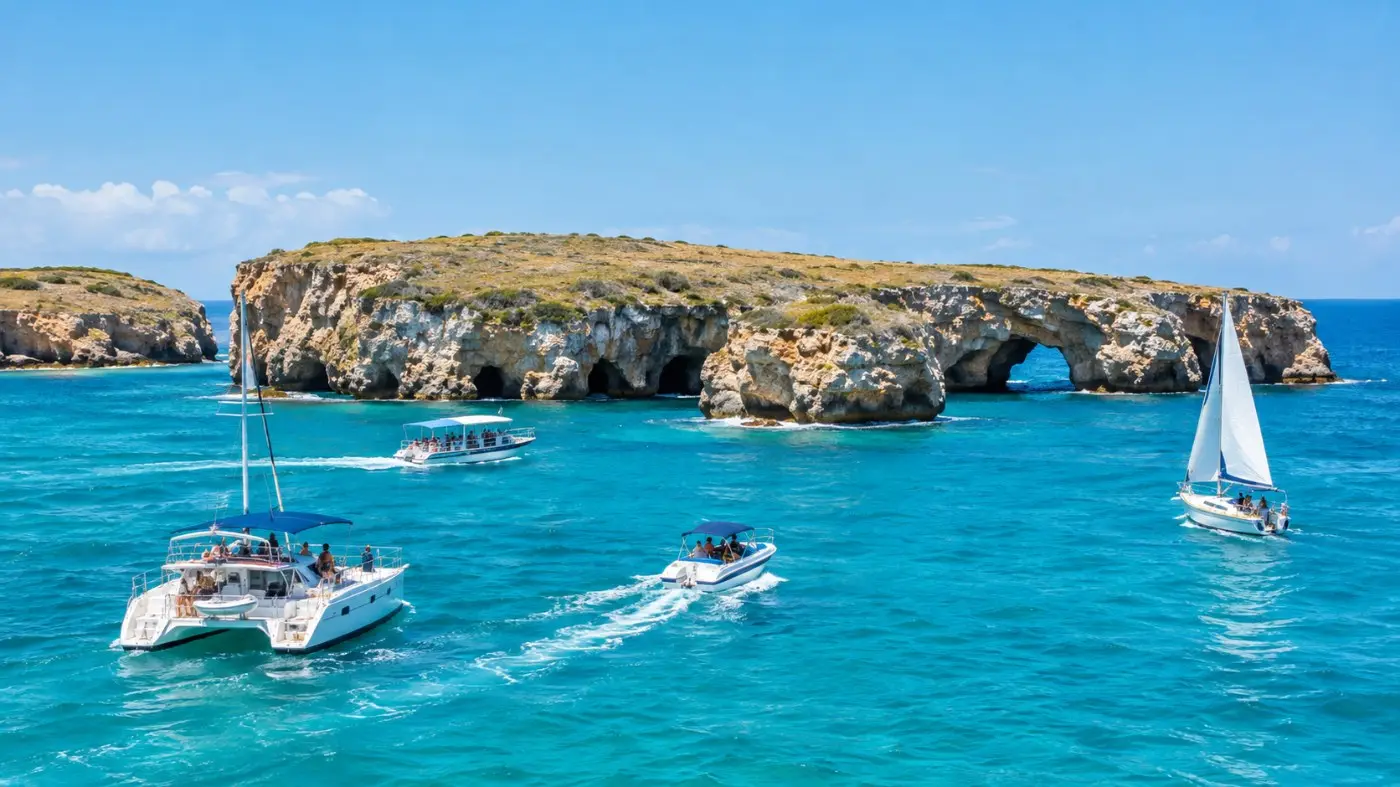
Booking choice: The snorkel and kayak boat day, from $119 per person. Check dates Tour details
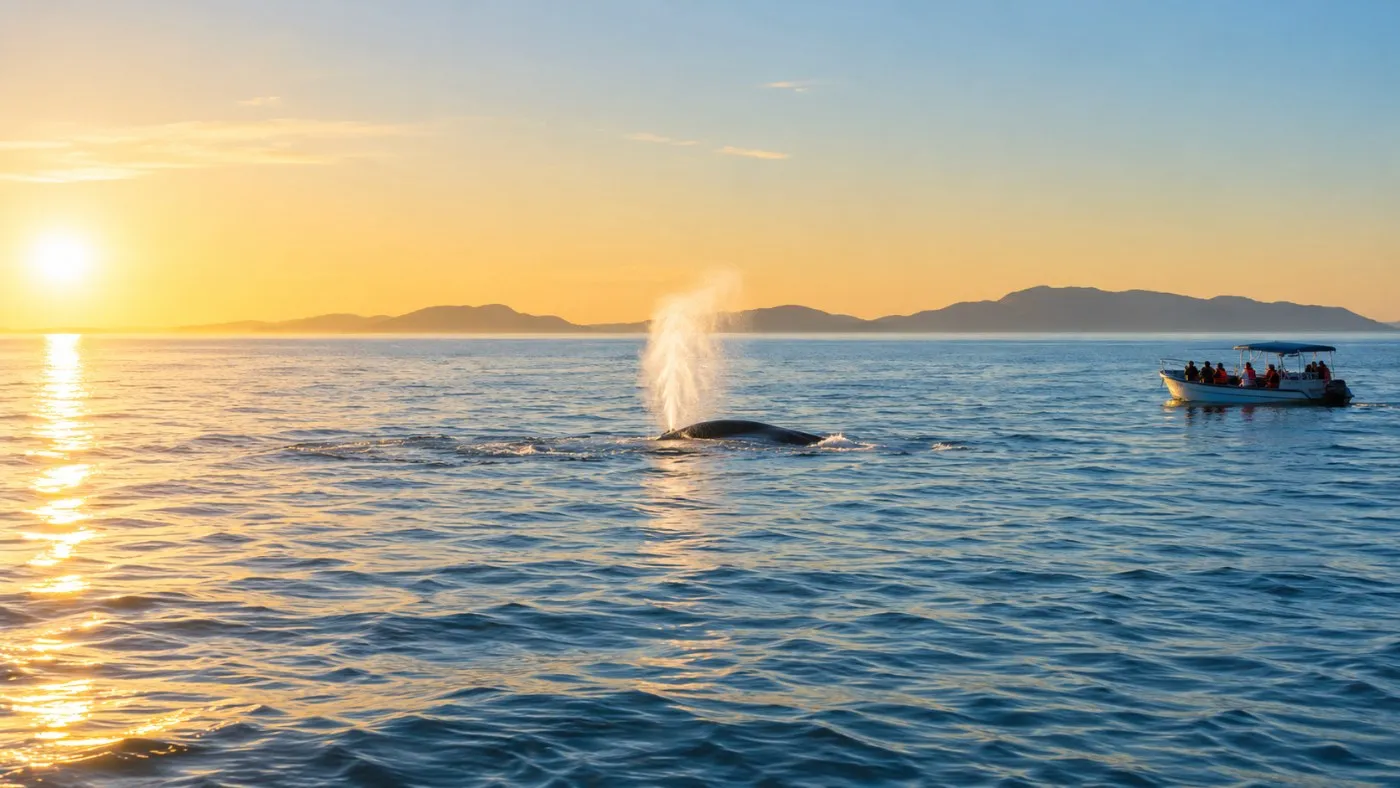
The humpbacks that winter in Banderas Bay arrive from the cold waters of the North Pacific to breed and calve. Mexico regulates the watching under a federal standard, NOM-131, and SEMARNAT publishes the official season every autumn.
This post covers the 2026-27 window as it stands on 22 October 2026, how close boats can get, and what the season means if you are booked on a Marietas snorkel day rather than a whale tour.
The quick answer
The official whale-watching window in Banderas Bay runs from 8 December to 23 March, and has done every season back to at least 2012-13. Expect 8 December 2026 to 23 March 2027 for this winter. January and February are the peak. Marietas boats often meet whales on the crossing, but whale watching as an activity is not allowed within 1.5 km of the islands.
When is whale season in Banderas Bay in 2026-27?
From 8 December 2026 to 23 March 2027, if SEMARNAT keeps the window it has set every season. The 2025-26 notice ran from 8 December 2025 to 23 March 2026.
SEMARNAT announces the season each autumn in the Diario Oficial de la Federación. The 2025-26 notice, signed on 2 October 2025, lists Banderas Bay under both Nayarit and Jalisco "del 08 de diciembre de 2025 al 23 de marzo de 2026". The 2012-13 notice used the same dates. As of 22 October 2026 we had not seen the 2026-27 notice; we will update this post when it is out.
The dates are for licensed whale-watching boats. Whales do not read the calendar. A few show up in late November, and some linger into April, but outside the window no boat may sell a whale-watching trip.
| Season | Official window in Banderas Bay | Source |
|---|---|---|
| 2012-13 | 8 December to 23 March | SEMARNAT notice, September 2012 |
| 2025-26 | 8 December 2025 to 23 March 2026 | SEMARNAT notice, October 2025 |
| 2026-27 | 8 December 2026 to 23 March 2027 expected | Notice not seen as of 22 October 2026 |
Which months are best for seeing humpbacks near the Marietas?
January and February. December is the build-up, March is the tail end with mothers and calves.
Numbers build through December as the whales arrive, peak in January and February, and thin out through March. Late in the season you see more mothers with young calves, resting near the coast. The dry season lines up neatly: calm mornings, clear skies and good visibility for the tunnel swim.
Our guide to the best time to visit the Marietas goes through the rest of the year, including the rainy months when Hidden Beach landings get cancelled most.
| Month | Whales | Marietas day |
|---|---|---|
| Late November | First arrivals possible, no official season | End of the rains, sea settling |
| December (from the 8th) | Season opens, numbers build | Dry, busy over the holidays |
| January | Peak | Dry, calm mornings |
| February | Peak | Dry, calm mornings |
| March (to the 23rd) | Mothers and calves, season closes | Dry, warmer, Easter crowds may start |
| April to November | Off season | Hotter, rains from about June |
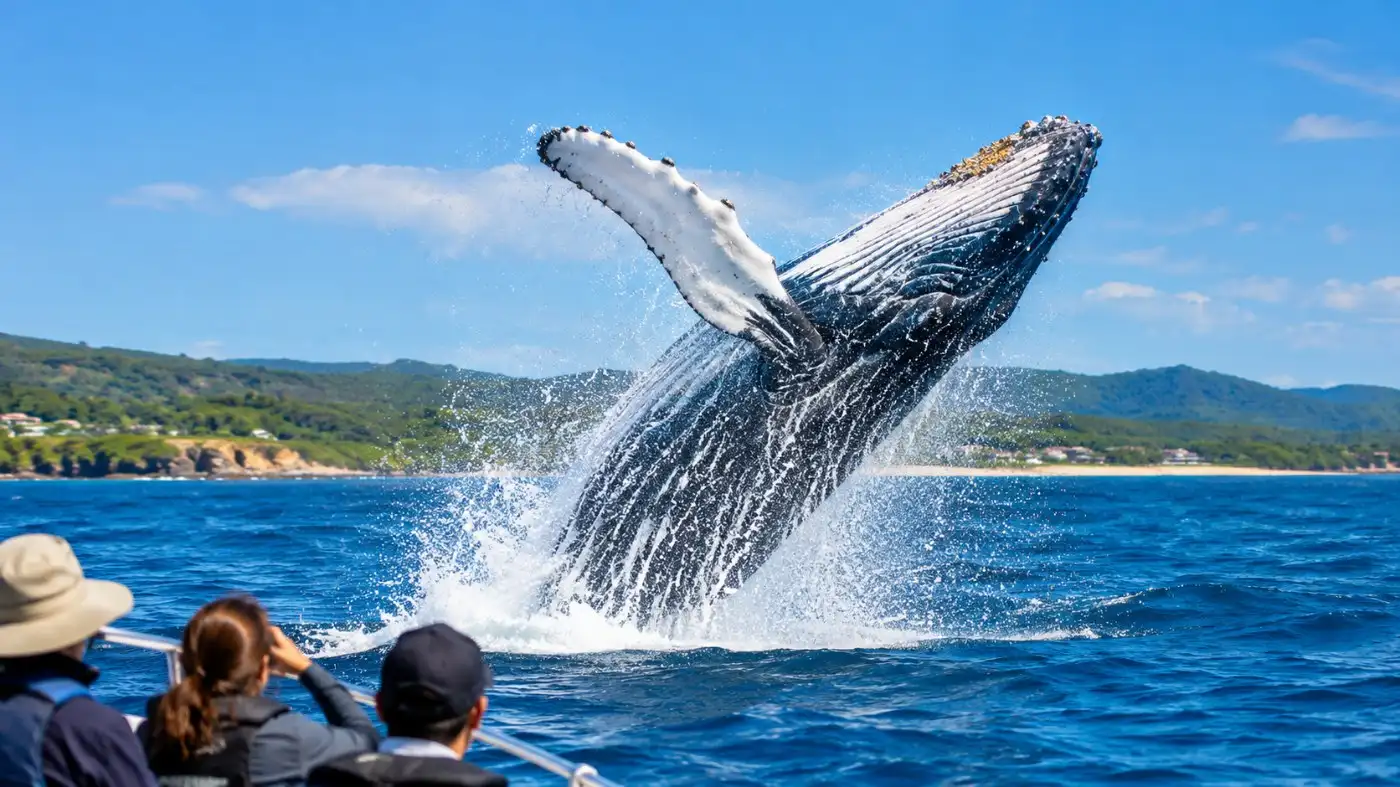
What does whale season mean for a Marietas boat trip?
Bonus sightings on the crossing, plus one rule: no whale watching within 1.5 km of the islands, where mothers and calves gather.
The SEMARNAT notice closes two areas of Banderas Bay to whale watching "por la concentración de ballenas con crías": a 1.5 km radius around the Marietas archipelago, and a 2 km strip along the coast from Punta Mita to the mouth of the Río Ameca. Your Marietas boat still goes through both, because it is going to the islands. What it cannot do is run a whale-watching session there.
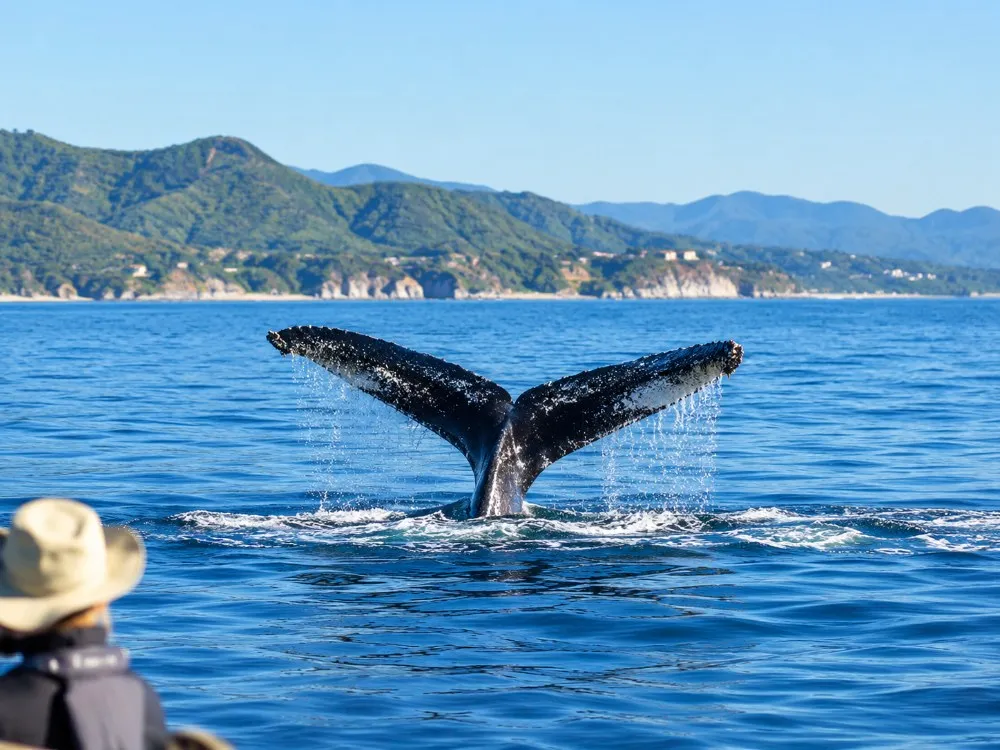
In practice a whale near the boat on the way out is a sighting, not an activity. A guest on the Playa La Nopalera tour in February 2026 wrote: "Captain stopped several times to watch whales which was not part of the itinerary."
How close can boats get to humpback whales in Mexico?
60 metres for small boats and 80 metres for larger ones, with at most four boats per whale or group and 30 minutes each.
These limits are in NOM-131-SEMARNAT-2010, the federal standard for whale watching. Boats approach from the side and behind, never head on, move parallel to the whale and keep slower than the slowest animal in the group. Swimming and diving with the whales are banned during observation, so a Marietas snorkel stop is never a swim-with-whales stop.
A University of Guadalajara report from January 2025 says tour boats in the bay often break the 60-metre rule to please guests. If your captain charges at a whale, that is the wrong boat.
| NOM-131 rule | Limit |
|---|---|
| Distance, small boats | 60 metres |
| Distance, medium and large boats | 80 metres |
| Waiting distance for extra boats | 240 metres |
| Boats with one whale or group | 4 at most |
| Time with one whale or group | 30 minutes at most |
| Speed in the observation area | Under 5 knots (9 km/h) |
| Swimming or diving with whales | Not allowed |
Which Marietas tours are most likely to see whales on the way?
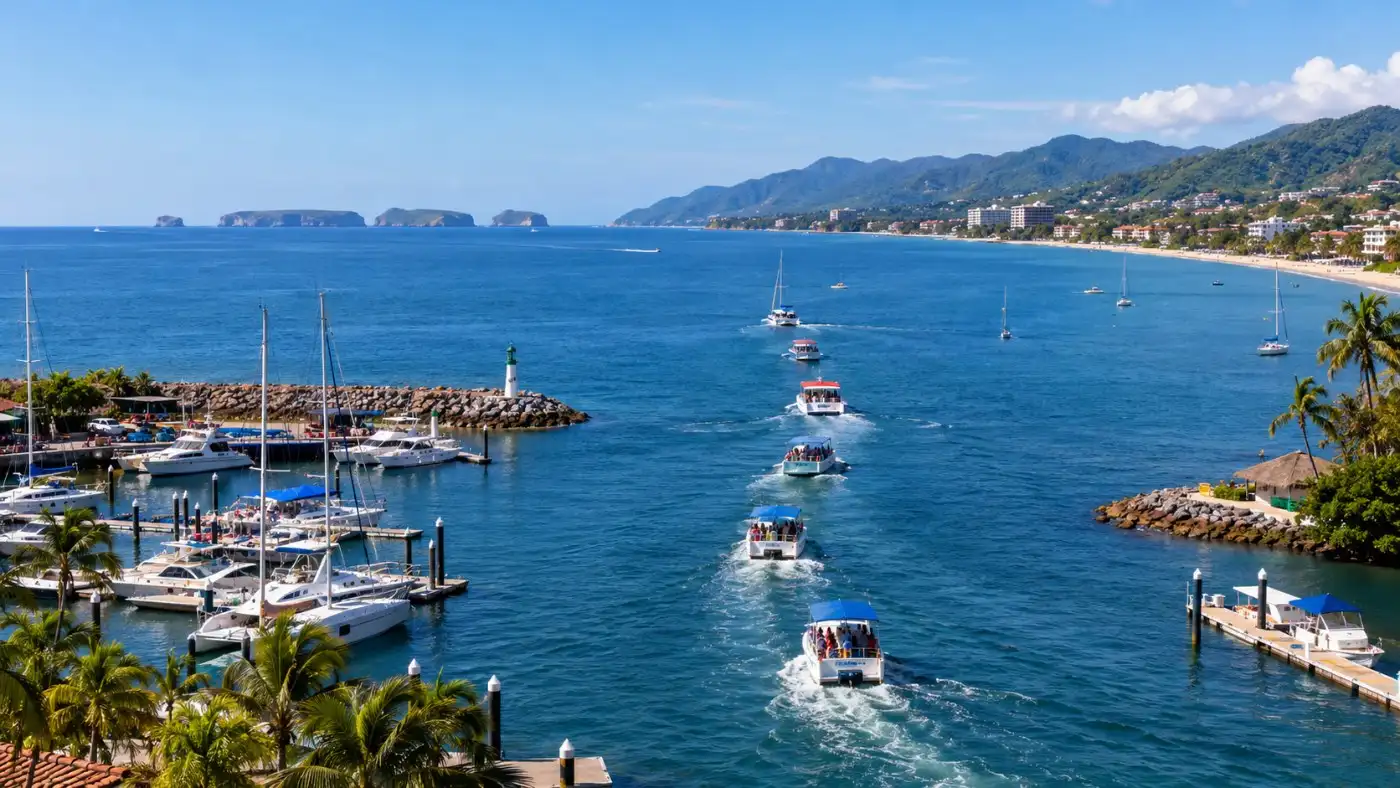
The ones with the longest time on the water. A crossing from Nuevo Vallarta or the north shore gives you far more bay than the 15-minute hop from Punta de Mita.
Sightings are luck, but time helps. The snorkel, kayak and Playa Nopalera day spends six hours out with a longer ride across the bay, and guests mention whales on it. One from January 2026: "saw loads of humpback whales, outstanding snorkeling, helpful staff, very good lunch!" The Hidden Beach tour from Nuevo Vallarta crosses a similar stretch.
From Punta de Mita, the Marietas safari gets you to the islands in about 15 minutes. You can still see whales: SEMARNAT's no-watching zones around the islands and along the Punta Mita coast exist because mothers and calves gather there. There is just less ride to see them in. Our guide to Punta de Mita or Puerto Vallarta compares the crossings.
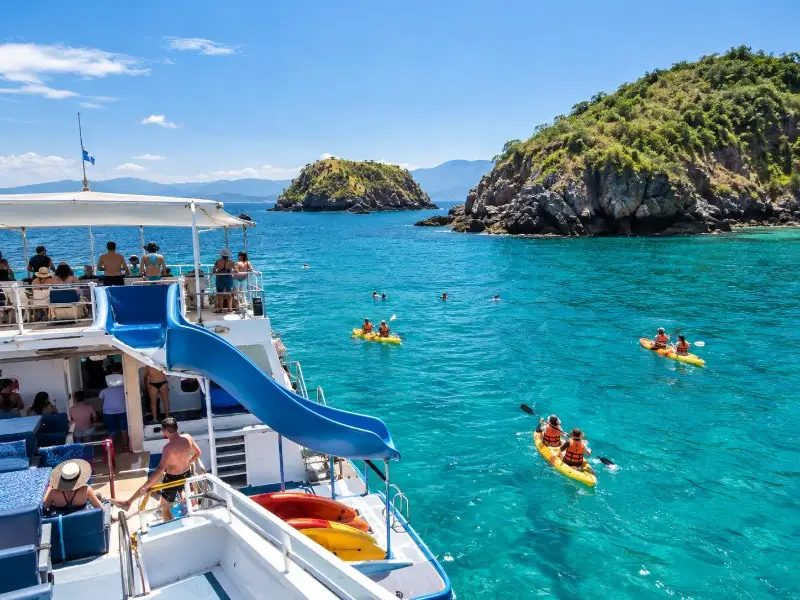
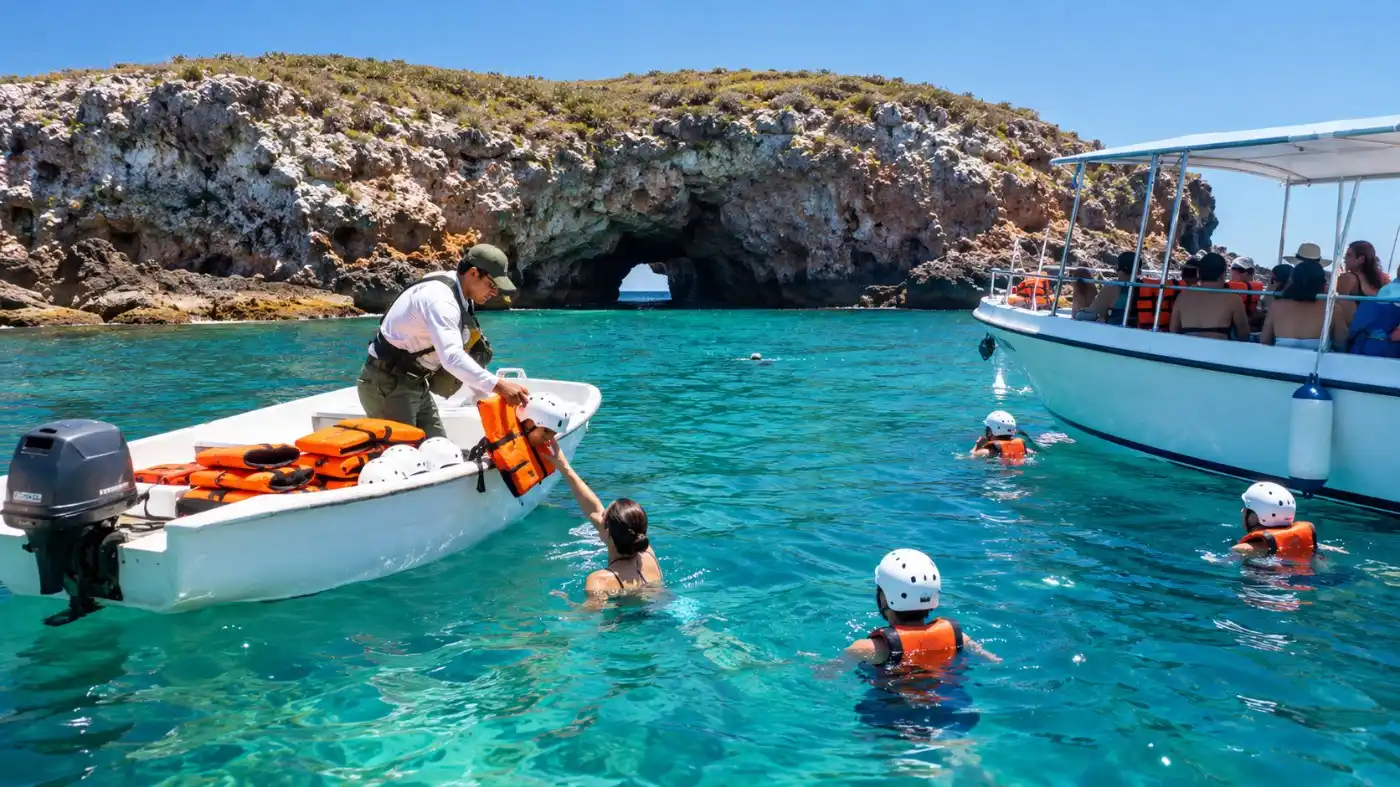
A long day on the water with snorkelling, kayaks, waterslides and Playa La Nopalera, and whales on the crossing in season.
Explore the snorkel and kayak boat day Tour detailsIs a Marietas tour the same as a whale-watching tour?
No. A whale-watching tour is a licensed trip built around the whales. A Marietas tour is a snorkel and beach day that may meet whales along the way.
Dedicated whale-watching boats carry a permit for the season, follow the NOM-131 limits and spend their time searching for whales, often with a guide who knows the behaviour. They cannot work inside the 1.5 km ring around the islands. Marietas tours do the opposite: their goal is the islands, the snorkelling and, on some, the Hidden Beach.
If whales are the main reason you are in Vallarta, book a dedicated whale tour as well. If you mainly want the islands, go in January or February and keep your eyes on the water on the way out.
Snorkel, kayak and paddleboard at the islands, with an open bar and a long crossing for whale spotting.
Check dates for the snorkel and kayak boat dayFrequently asked questions
When does whale season start in Puerto Vallarta in 2026?
The official window in Banderas Bay opens on 8 December and closes on 23 March. Expect 8 December 2026 to 23 March 2027, the same dates SEMARNAT set for 2025-26.
Can you see whales on a Marietas Islands tour?
Often, from December to March, on the crossing. Whale watching as an activity is not allowed within 1.5 km of the islands, so sightings come on the way out and back.
Can you swim with humpback whales near the Marietas?
No. NOM-131 bans swimming and diving with whales during observation, and boats must keep at least 60 to 80 metres away.
Ready to book
Choose your tour
Free cancellation up to 24 hours before on every option. Prices are from-prices in USD and move with the season.
Snorkel, Kayak & Playa Nopalera Boat Day
- Snorkel, kayak and paddleboard at the islands
- Guided landing on Playa La Nopalera
- Breakfast, guacamole and a fajita lunch
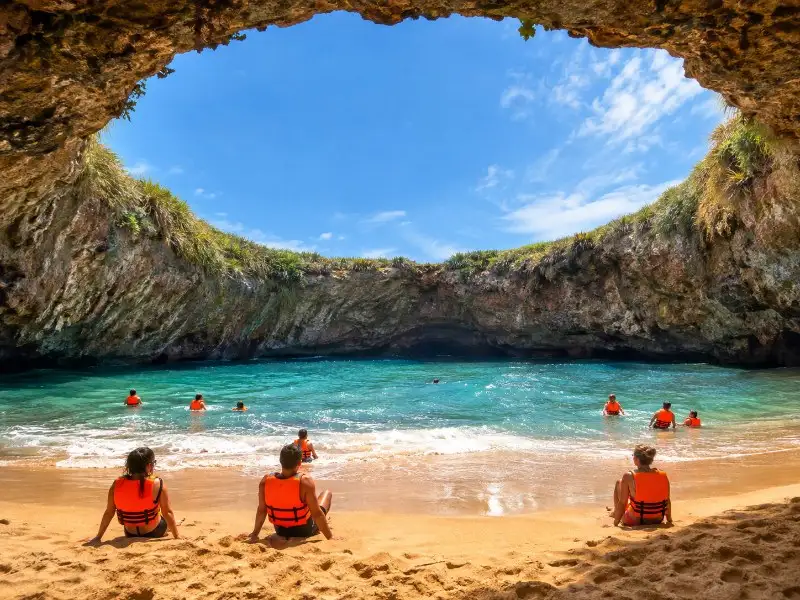
Hidden Beach Tour from Nuevo Vallarta
- Swim to the Hidden Beach, tide and park permitting
- Boat from Paradise Village pier and back
- Breakfast, light lunch and a domestic open bar
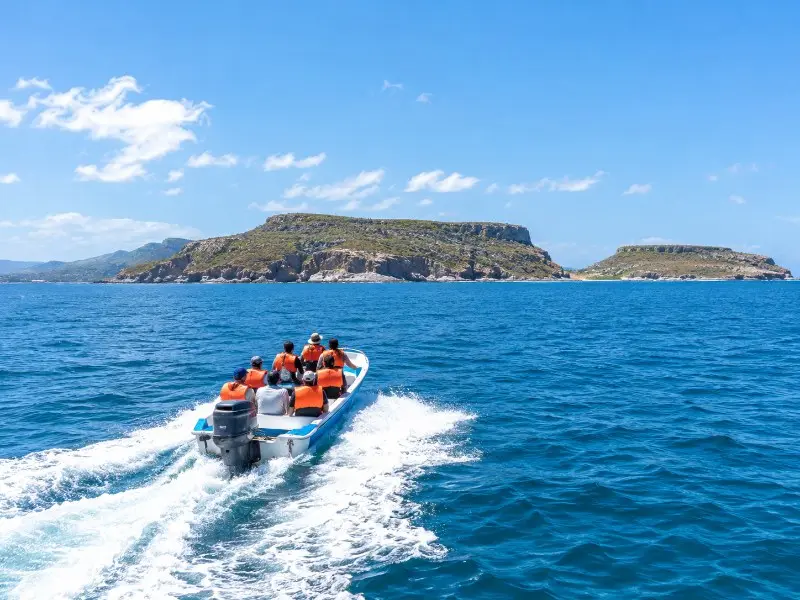
Marietas Islands Safari from Punta de Mita
- Hidden Beach entrance listed, tide permitting
- Park fee and port tax
- Snorkel gear and soft drinks