Booking choice: The snorkel and kayak boat day, from $119 per person. Check dates Tour details
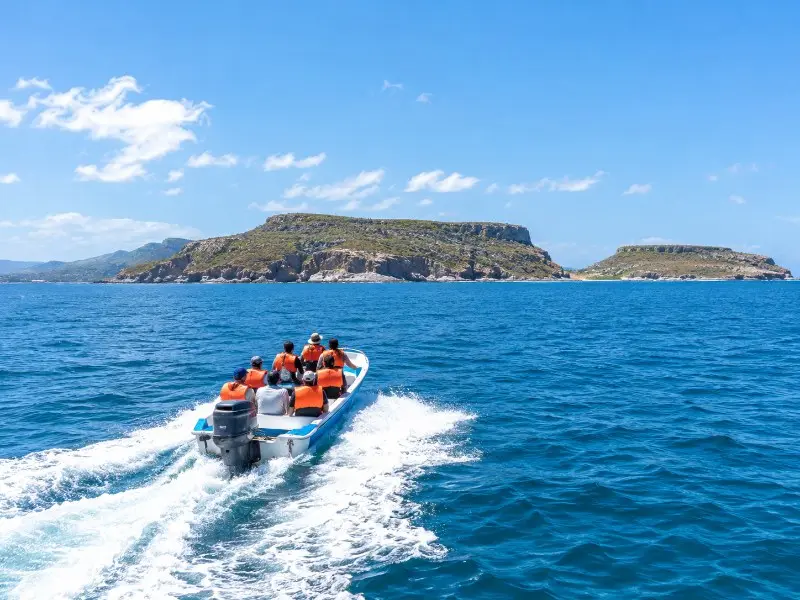
The Hidden Beach gets the photos, but snorkelling fills most of the time on a Marietas tour. The islands sit where the bay meets the open Pacific, the water is clear, and the volcanic rock drops into reef, caves and arches. Gear is included on the tours on this site.
The rules are stricter than elsewhere on the coast. You wear a life jacket the whole time, freediving is not allowed, and sunscreen is a sore point. Here is what you will see, where to look, and what to pack.
The quick answer
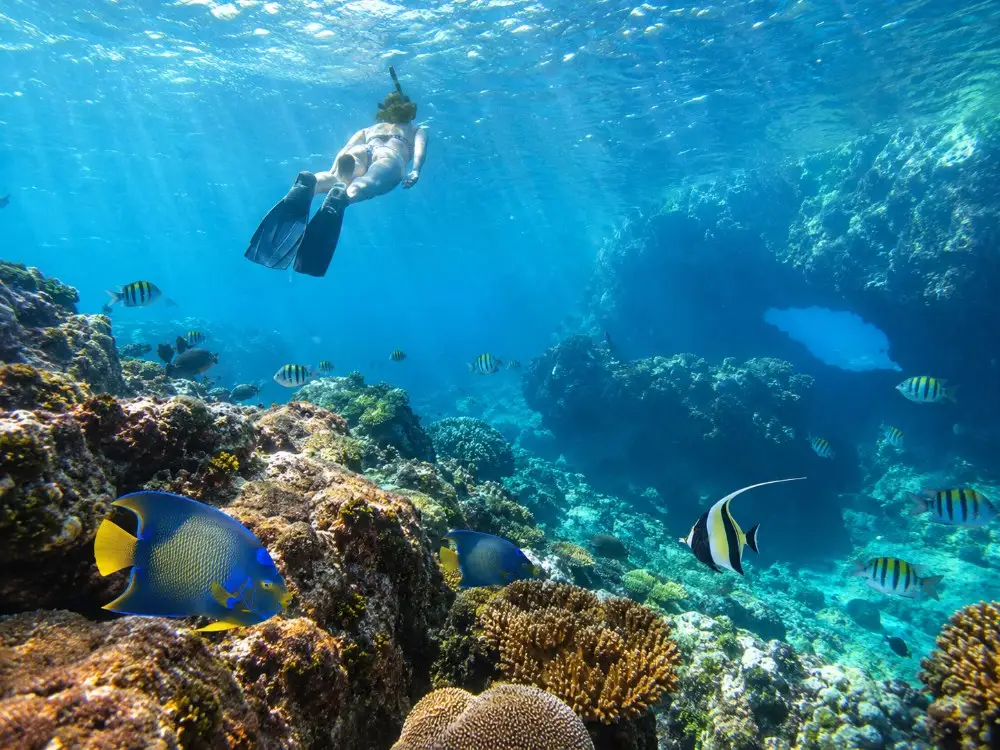
Yes, you can snorkel at the Marietas: it is the main activity on almost every tour. Expect king angelfish, Moorish idols, parrotfish, pufferfish and damselfish, with a chance of rays, turtles and dolphins. The best reef is off Isla Larga, near Playa La Nopalera. Life jackets are mandatory, freediving is not allowed, and many guides ban sunscreen. Water runs from about 21°C in winter to 29°C in late summer.
Can you snorkel at the Marietas Islands?
Yes. Snorkelling is the main activity on almost every Marietas tour, and the gear is usually included. You snorkel from the boat or from the beach at Playa La Nopalera.
The park rules on the CONANP page make a life jacket mandatory in the water. You float on the surface and look down; diving under is out. Operators say freediving is prohibited by federal rules, so skin-diving down to the reef is off the table too.
That suits beginners. You do not need to be a strong swimmer to snorkel here, only comfortable with your face in the water. A guide stays with the group, and most boats hand out masks, snorkels and vests on the way. Strong swimmers who want more get the Hidden Beach tunnel on the tours that include it.
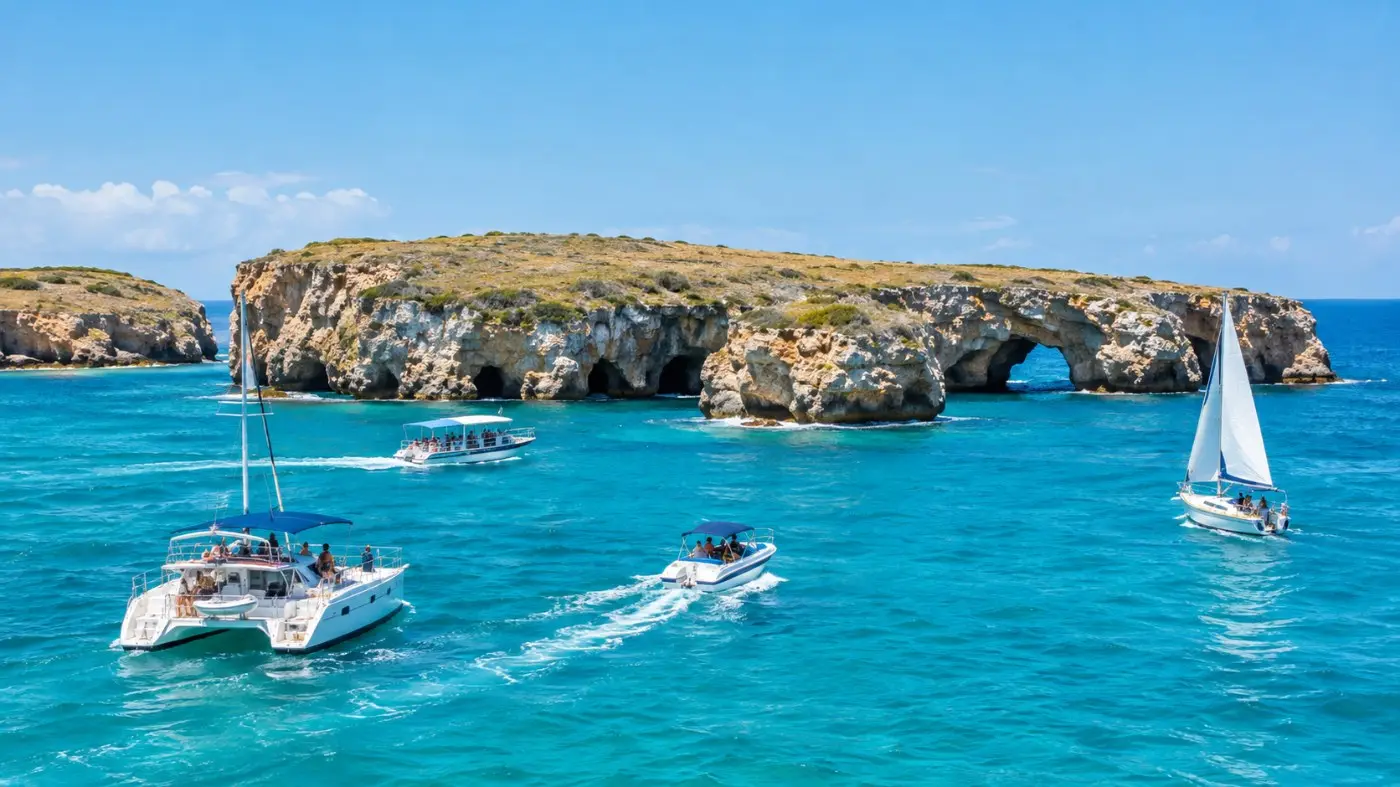
Expect two or three stops on a typical tour: one along the cliffs, one near the arches, and one off a beach.
What can you see snorkelling at the Marietas?
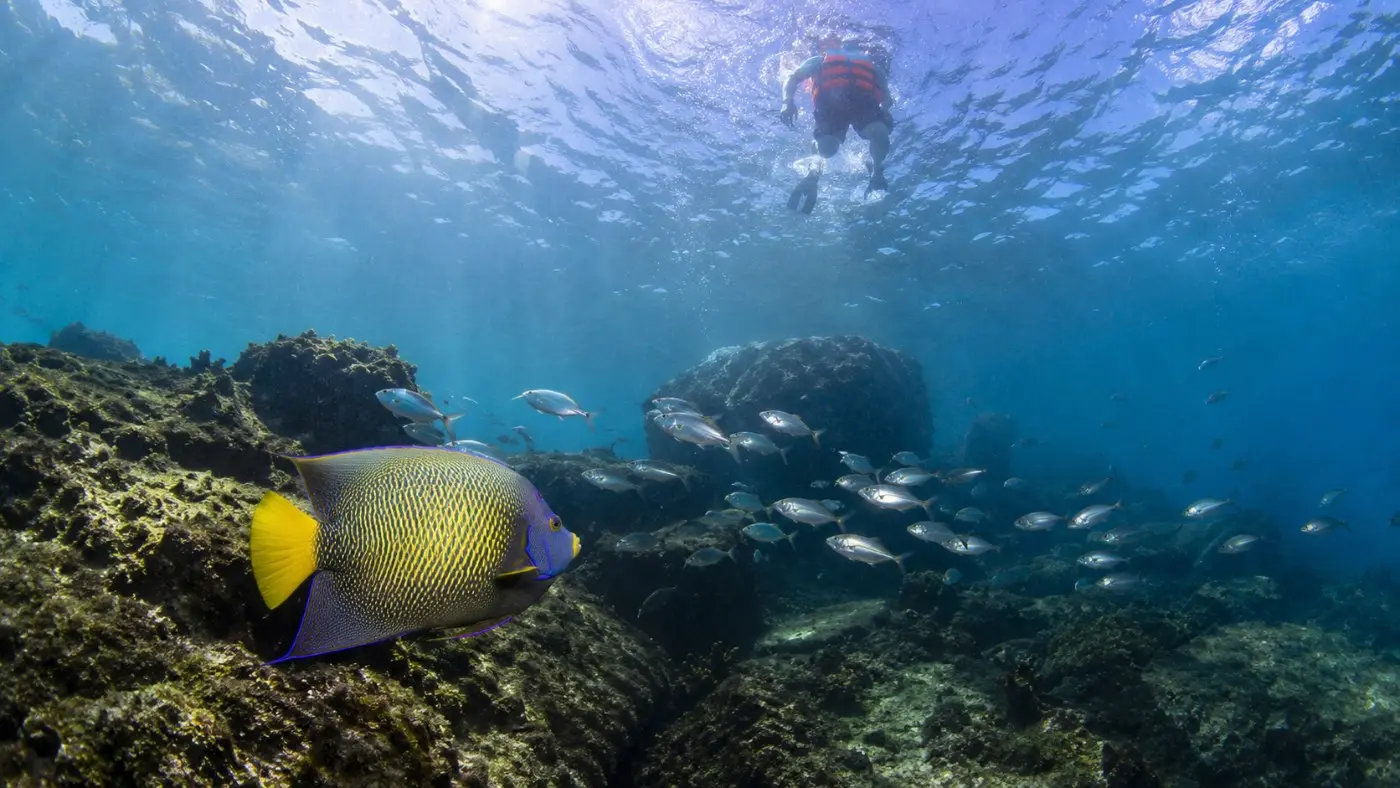
Reef fish such as king angelfish, Moorish idols, parrotfish, pufferfish, giant damselfish and butterflyfish, plus eels, octopus and sea stars. Rays, turtles and dolphins are a bonus.
Vallarta Adventures counts around 115 fish species and 12 coral species in the park. The common sightings from the surface are the bright ones: king angelfish, Moorish idols with their long white fins, parrotfish grazing the rock, giant damselfish and the odd pufferfish. Look into cracks for moray eels, octopus and urchins.
The park lists the giant manta and the spotted eagle ray among its representative species, along with the olive ridley turtle. You will not see them on every trip; seeing one is luck. Dolphins often ride the bow on the way out.
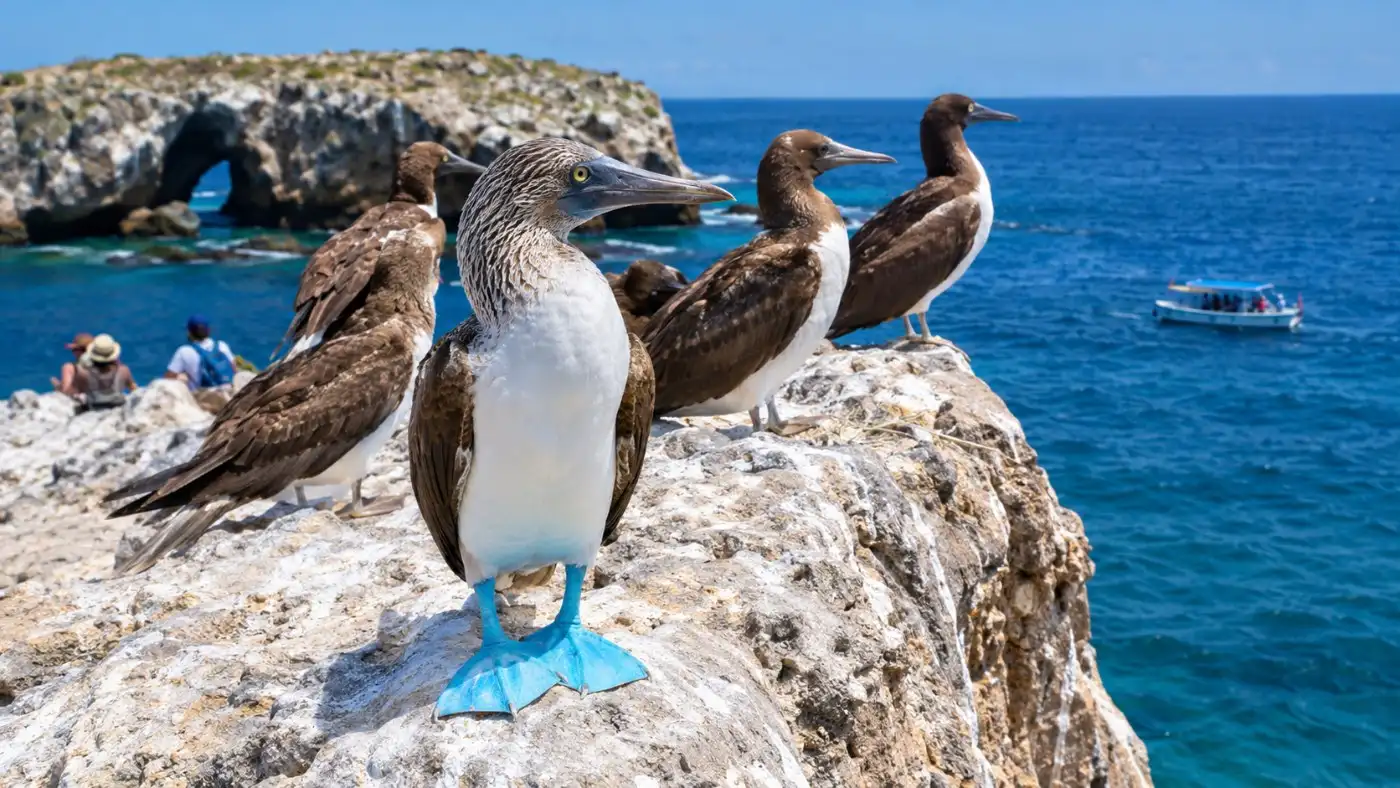
Above the water the islands are a bird sanctuary: the largest brown booby colony in Mexico, blue-footed boobies, frigatebirds, red-billed tropicbirds and Heermann's gulls. One guest on the Hidden Beach tour said the guide "was very knowledgeable and educated us about the marine life"; ask yours to point things out.
Where is the best snorkelling at the Marietas?
Off Isla Larga, which has the largest patch reef in the area, and around the arches and rock walls near Playa La Nopalera.
Isla Larga, the longer of the two islands, shelters the main reef. Guides usually pick the side out of the swell that day, so the exact spot changes. Near Playa La Nopalera the water is shallow and calm enough for children and nervous swimmers. Along the cliffs and under the arches the rock drops off, the fish get bigger, and the water turns deep blue.
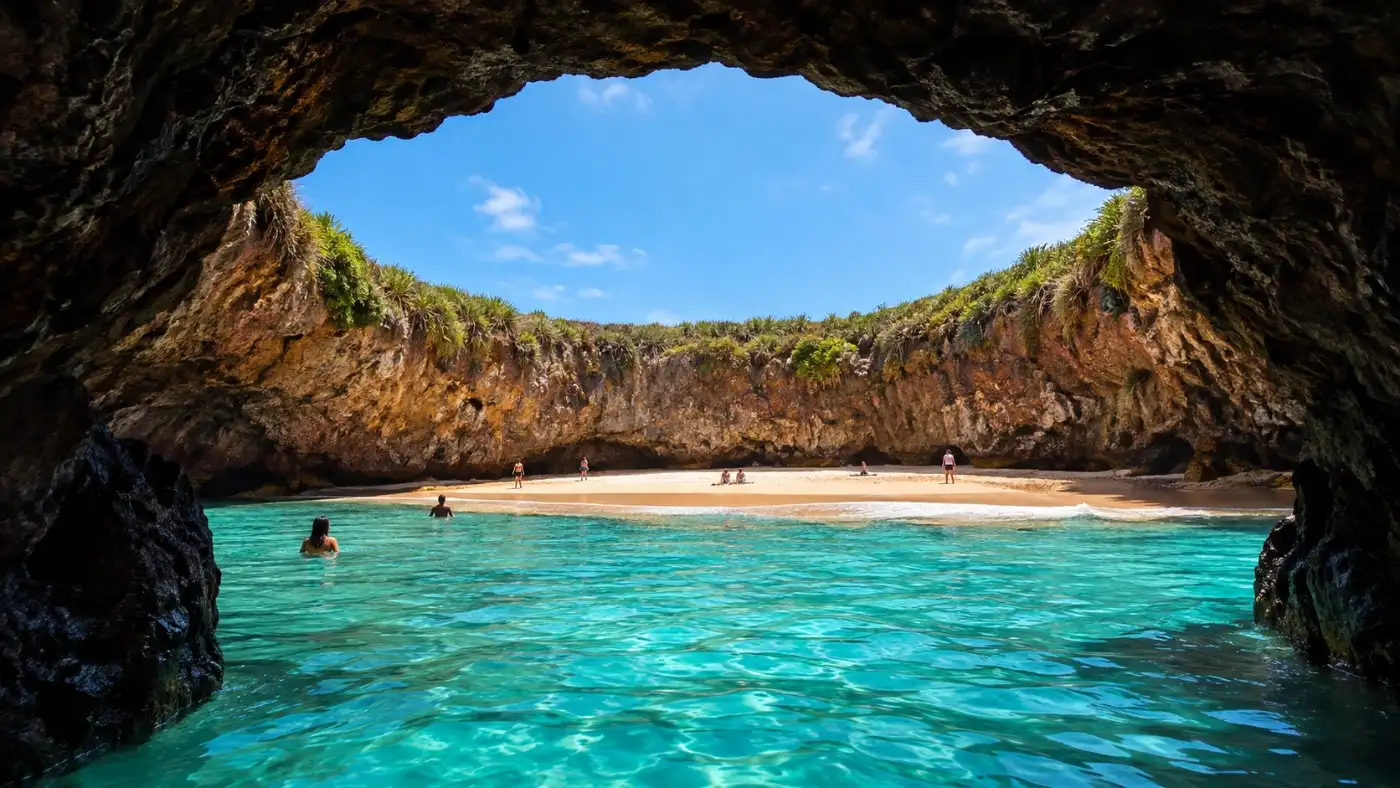
The Hidden Beach tunnel is not a snorkel spot. You swim through it with your head up, following the guide, and there is no lingering.
For long stretches in the water, the snorkel and kayak boat day and the Puerto Vallarta snorkeling trip are built around snorkelling. One guest on the first wrote: "snorkeling was the best part, I wish we could have snorkeled at additional locations!"
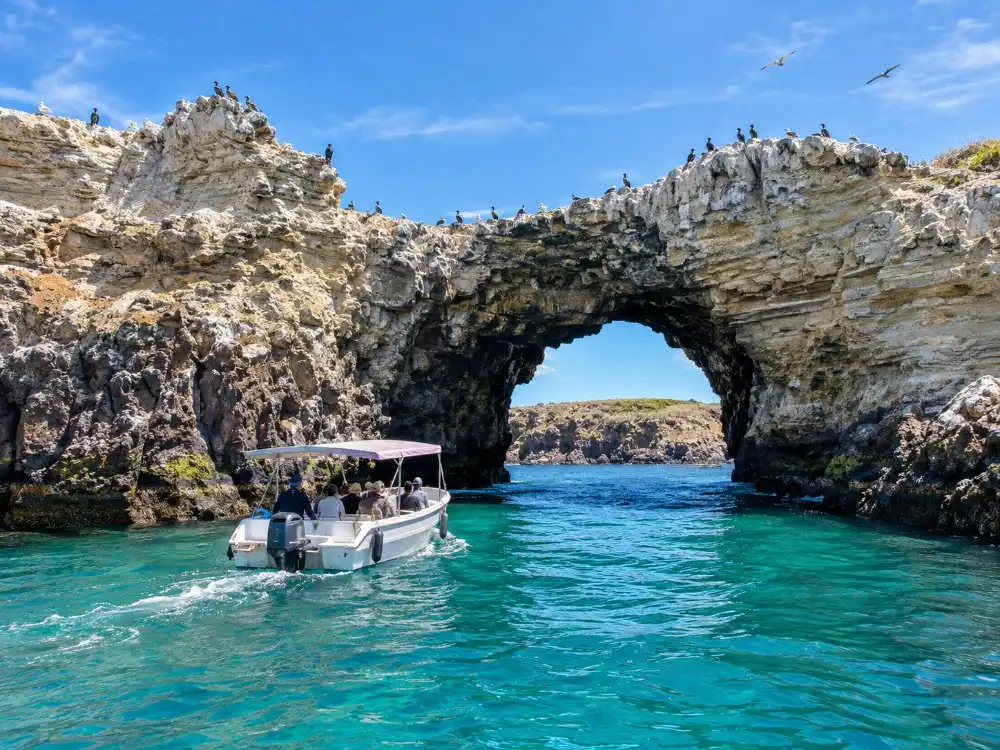
A small-group snorkel day from Puerto Vallarta, no road transfer to Punta de Mita.
Check dates for the Puerto Vallarta snorkeling tripWhat are the gear and sunscreen rules?
Life jacket on at all times in the water, no shoes in the water, and eco-friendly sunscreen only, applied 30 minutes before. Many guides ban sunscreen altogether, and fins are not allowed in the Hidden Beach tunnel.
The official CONANP rules are short: follow the guides and rangers, wear a life jacket in the water, no alcohol, no litter, no single-use plastics, do not touch, take or bring in animals, and use only eco-friendly sunscreen at least 30 minutes before you swim. Footwear is not allowed in water or beach activities.
Operators go further. The Vallarta Adventures guide says fins are not allowed in the water to protect the coral, and that many guides and rangers prohibit all sunscreen, including biodegradable types. Some tours still hand out fins for the open-water snorkel stops: the Nuevo Vallarta Hidden Beach tour lists them in its gear. Either way, fins stay on the boat for the tunnel.
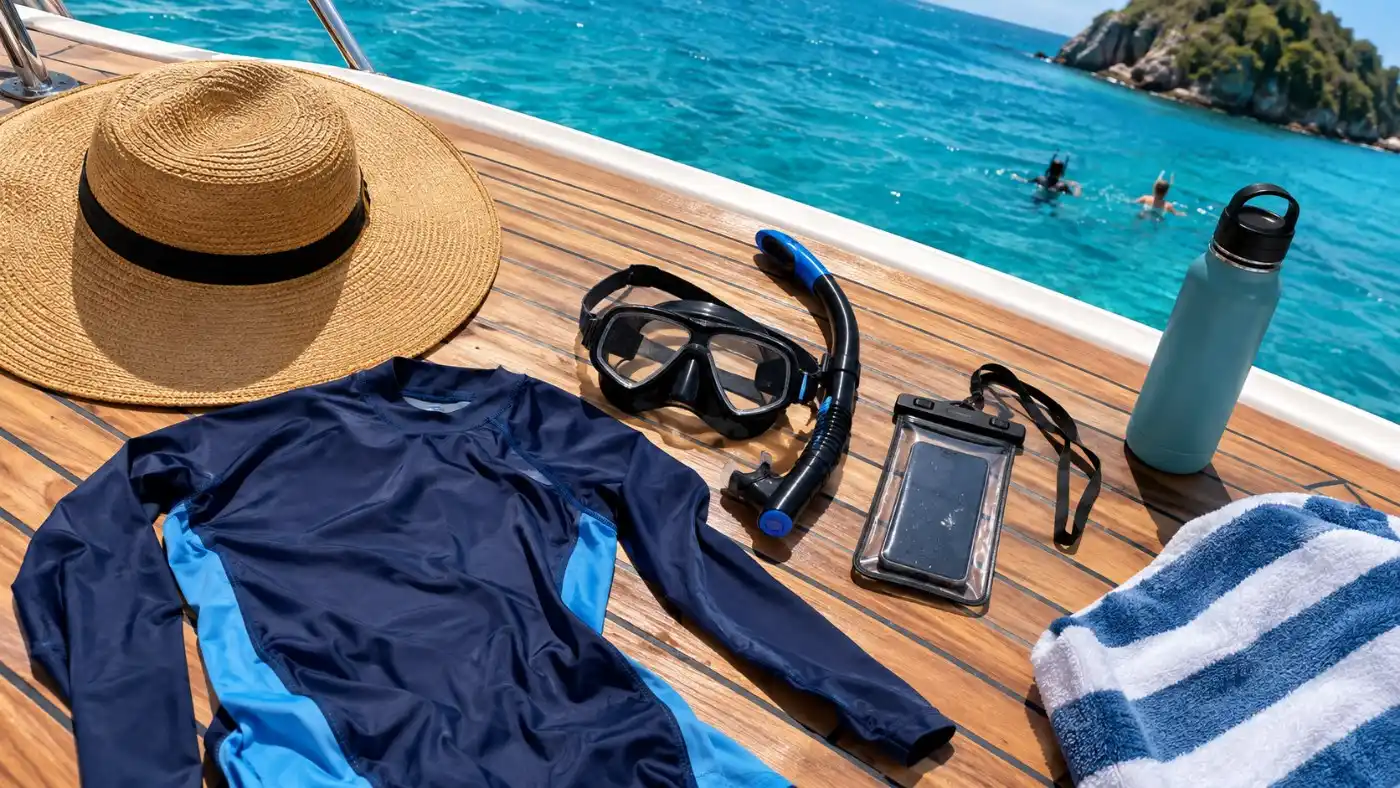
The simple answer is a long-sleeved rash guard, a hat for the boat and sunglasses. If you wear prescription glasses, ask the operator about a corrective mask before the day.
When is the water clearest and warmest?
Water runs from about 21°C in winter to 29°C in August and September. November to May brings the calmest seas; summer is warmest but wettest.
The dive guide dive.site gives about 21°C (70°F) in winter and 29°C (84°F) in summer, with visibility usually around 15 metres. Nobody needs a wetsuit. A thin rash guard is enough even in January, though the boat ride back can feel cool in wet clothes.
Calm seas make the biggest difference to what you see. November to May is the steady period, with less swell and almost no rain. July to September brings warm water, storms and the most cancelled trips. The month-by-month view is in the best time to visit.
Mornings are usually calmer than afternoons, when the wind picks up. Book an early slot if you can.
Can you scuba dive at the Marietas Islands?
Yes. CONANP lists scuba diving among the park's activities, and several Puerto Vallarta and Punta de Mita dive shops run guided dives there.
Diving is a separate trip with a certified dive operator, not something you add to a snorkel tour. Dive sites around the islands include volcanic walls, tunnels, arches and caves, per dive.site. Live Punta Mita describes a cave about 12 metres down with an air pocket where divers can surface inside the rock.
Divers need certification or a supervised intro dive. Non-divers in the group can snorkel from the same boat on some trips; ask when booking. None of the tours on this site are dive trips.
Snorkel day or Hidden Beach tour?
Pick the snorkel day if you want more time in the water and on a beach, for less money. Pick the Hidden Beach if the crater is the reason you came.
A Hidden Beach tour gives you about 15 to 20 minutes in the crater plus a snorkel stop or two. A snorkel and Playa La Nopalera day gives you more stops, kayaks or paddleboards on some trips, and a long landing on an open beach. No tunnel, no age cut-off for the swim, and kids can join.
Confident swimmers with one day: the Hidden Beach, if the dates work. Everyone else: the snorkel day. The Hidden Beach guide explains the swim, and which tour to book lists all eight.
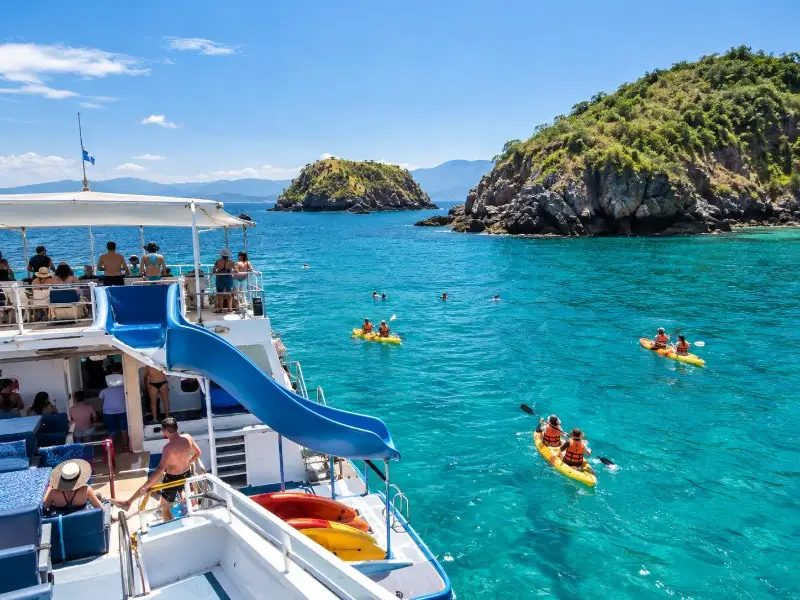
Snorkel, kayak and paddleboard around the islands, then land on Playa La Nopalera. No tunnel, open bar on board.
Explore the snorkel and kayak boat day Tour detailsWhere is the best snorkelling near Puerto Vallarta?
The Marietas Islands for clear blue water and fish; Los Arcos, south of town, for a shorter, cheaper trip.
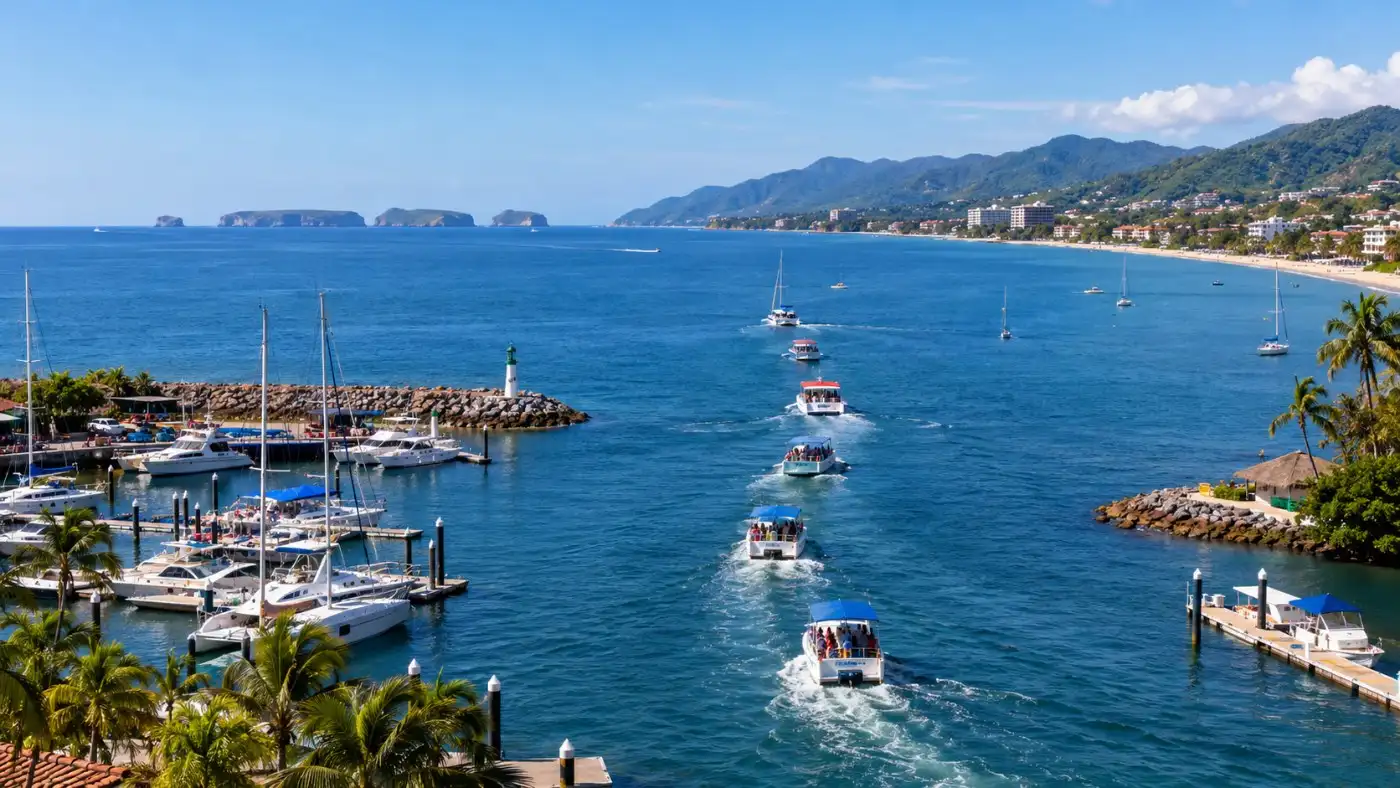
If you are asking where the bluest water near Puerto Vallarta is, the answer is out at the Marietas: they sit at the mouth of the bay, away from river mouths and town beaches. On a calm morning the water around Isla Larga is deep blue over the rock.
Closer to town, Los Arcos are granite islands off Mismaloya, just south of town. The Los Arcos five islands tour takes 3.5 hours with a snorkel stop and nesting birds in the arches, and suits ages 8 and up. It is a good second morning, or a first one if your kids are too young for a long day at the Marietas.
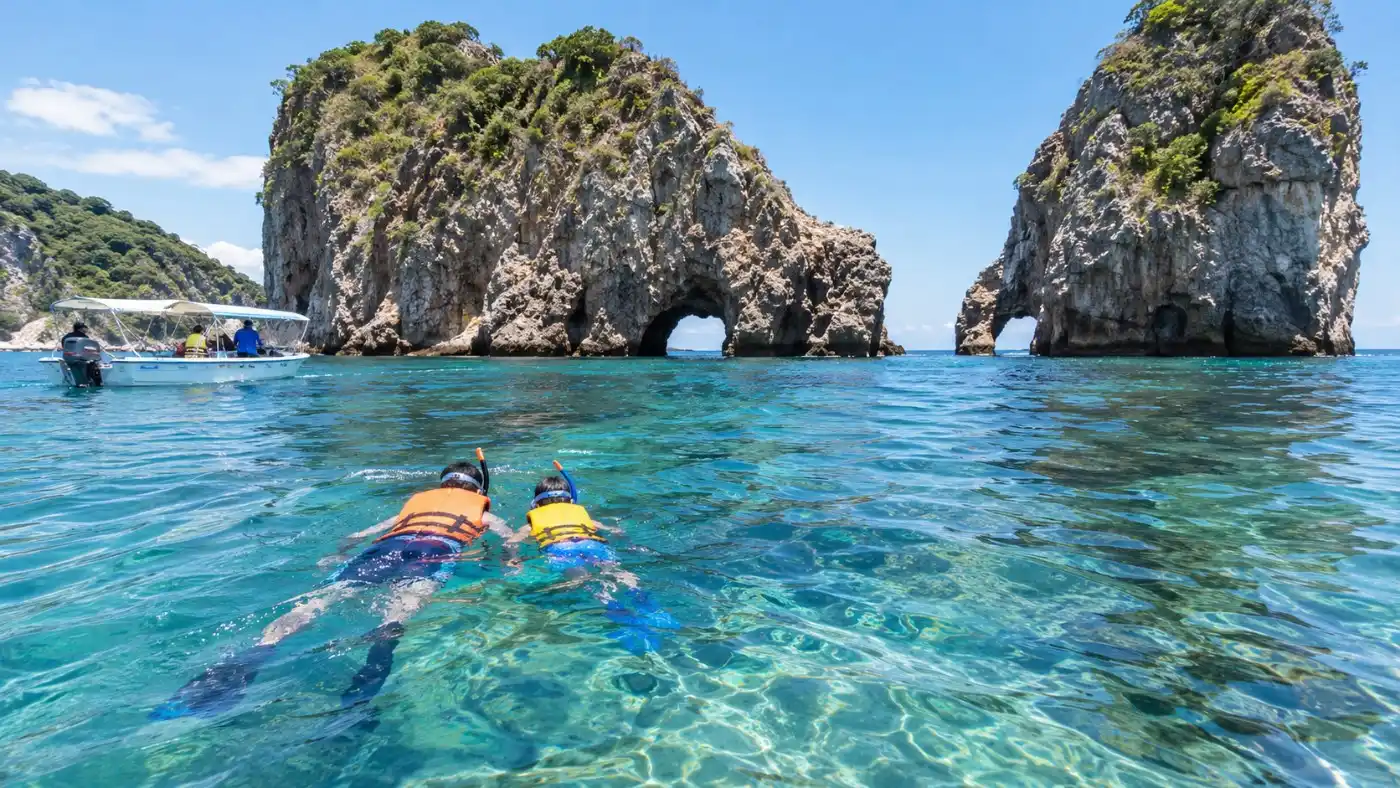
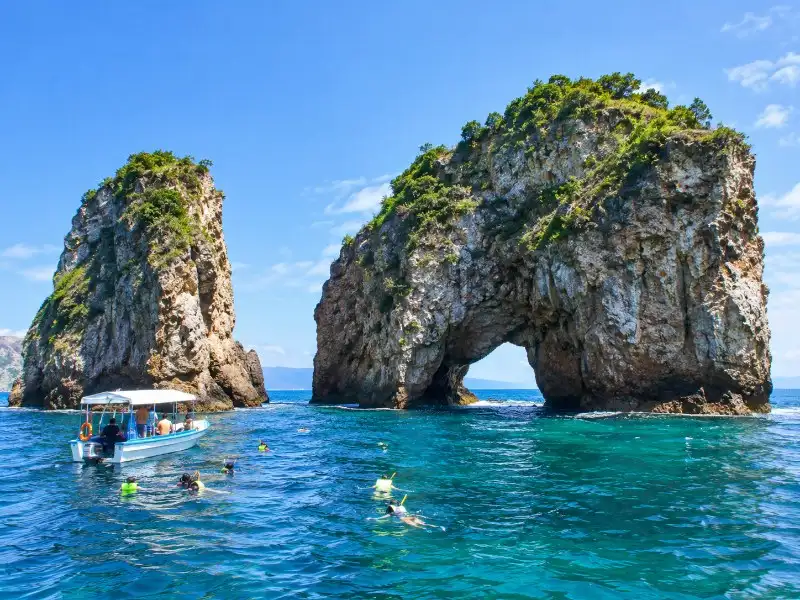
The short snorkel on the south side of the bay: granite arches, nesting birds and a guide, in 3.5 hours.
Explore the Los Arcos snorkel tour Tour detailsFrequently asked questions
Do I need to be a good swimmer to snorkel at the Marietas?
No. You wear a life jacket the whole time, so you float on the surface and a guide stays close. You need to be comfortable with your face in the water. The Hidden Beach tunnel is different: it asks for confident open-water swimming.
Is snorkel gear included on Marietas tours?
On the tours on this site, yes: mask, snorkel and life jacket are included. Bring your own mask if you have one that fits well, and ask about a prescription mask if you need one.
Can I wear sunscreen at the Marietas Islands?
Officially only eco-friendly sunscreen, applied 30 minutes before swimming. Many guides ban all sunscreen, especially at the Hidden Beach. A long-sleeved rash guard and a hat are the safe choice.
Is it safe to swim in the ocean in Puerto Vallarta?
Banderas Bay is mostly sheltered and town beaches are usually calm, but check the beach flags and stay out on red-flag days. At the Marietas you always swim in a life jacket with a guide, and operators cancel when the swell is high.
Ready to book
Choose your tour
Free cancellation up to 24 hours before on every option. Prices are from-prices in USD and move with the season.
Snorkel, Kayak & Playa Nopalera Boat Day
- Snorkel, kayak and paddleboard at the islands
- Guided landing on Playa La Nopalera
- Breakfast, guacamole and a fajita lunch
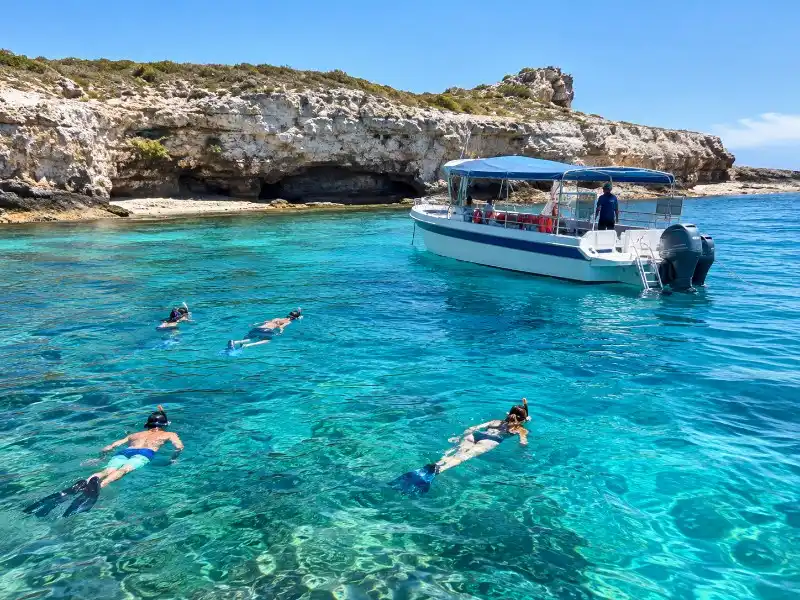
Marietas Snorkeling Trip from Puerto Vallarta
A small-group snorkel day without leaving Puerto Vallarta
Marietas Islands Safari from Punta de Mita
- Hidden Beach entrance listed, tide permitting
- Park fee and port tax
- Snorkel gear and soft drinks